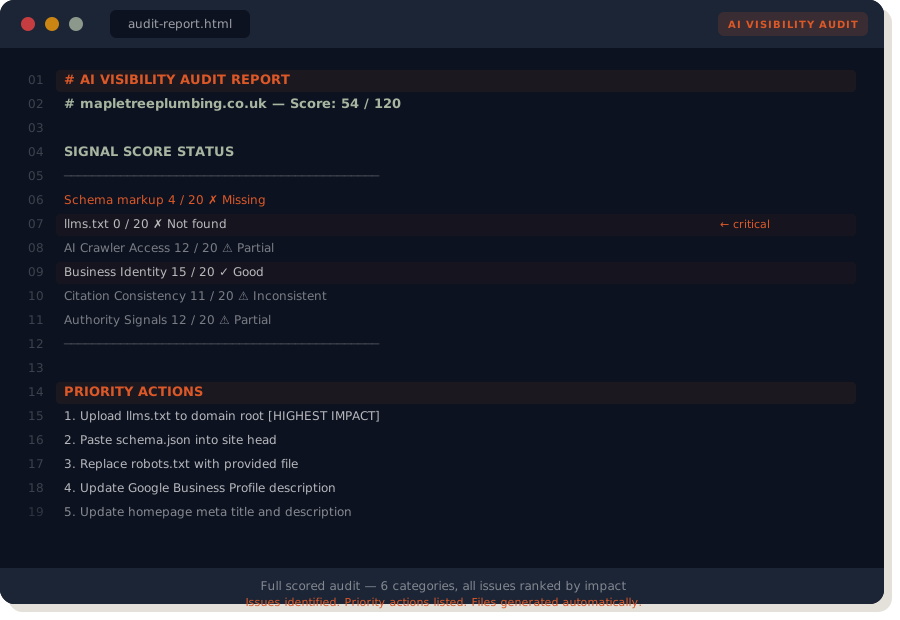
Your score is based on what's actually there — not a guess.
Starting checks...
One-off payment. No contracts. No calls. Any website platform.
| Monitoring tools Semrush, Peec AI, Profound, Otterly |
Agency / consultant GEO & AEO retainers |
DIY Do it yourself |
Technical Graffiti Automated file generation |
|
|---|---|---|---|---|
| Generates your technical files | ✗ | ✓ | Manually | ✓ |
| Creates your llms.txt | ✗ | ✓ | Possible, error-prone | ✓ |
| Creates your schema markup | ✗ | ✓ | Possible, error-prone | ✓ |
| Fixes AI crawler permissions | ✗ | ✓ | Possible | ✓ |
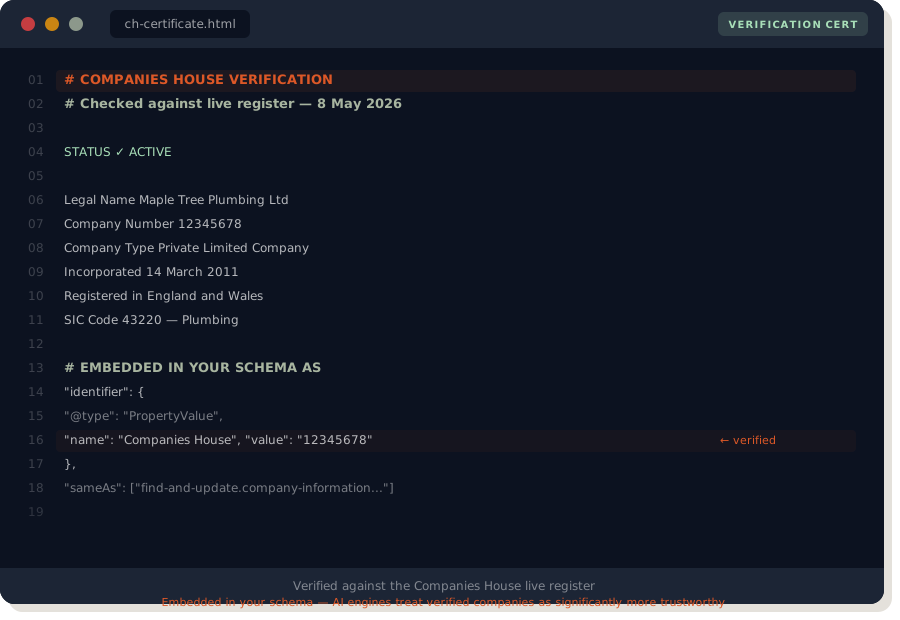
| Verifies Companies House identity | ✗ | Sometimes | ✗ | ✓ Extended & Complete |
| Built specifically for your domain | ✗ | ✓ | Depends on skill | ✓ |
| Delivery time | Instant tracking | Weeks | 4–8 hours minimum | Minutes |
| Pricing model | Monthly subscription £30–£300+/mo |
Monthly retainer £500–£2,000+/mo |
Free — but costs time and risks errors |
One-off payment from £95 |
| No developer required | — | ✗ | ✗ | ✓ |
| Suitable for SMEs & sole traders | ✗ | ✗ | In theory | ✓ |
| Works for any website platform | — | Varies | Varies | ✓ |
| Free diagnostic check included | Trial only | Varies | Manual only | ✓ Always free |
Monitoring tool pricing based on published rates for Semrush AI Toolkit, Peec AI and Otterly as of June 2026. Agency retainer ranges are indicative of mid-market UK GEO/AEO engagements. DIY time estimates based on typical implementation time for a non-technical business owner with no prior schema or llms.txt experience. No guarantee of appearing in AI search results applies to any service — including Technical Graffiti.
There are two separate problems here and most businesses only fix one of them.
For Google, the most common causes are that your pages haven't been crawled yet, your robots.txt file is accidentally blocking Google's crawlers, or your site has a noindex tag in place. Beyond that, Google needs to verify your business is real — which means consistent name, address and phone number across every directory you appear in, schema markup on your website, and a sitemap submitted to Google Search Console.
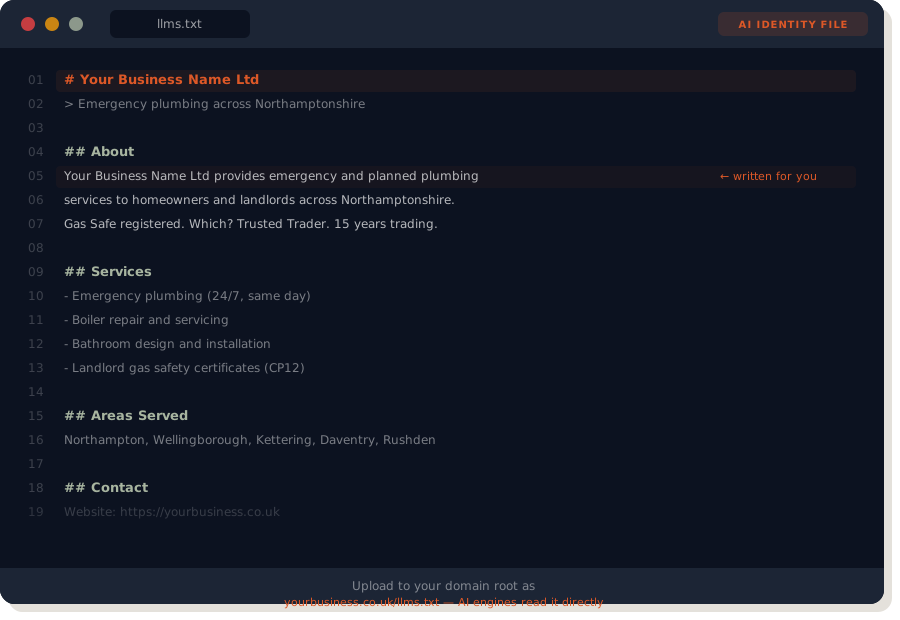
For AI search — ChatGPT, Gemini, Perplexity — the rules are different. These engines don't rank pages, they cite businesses they can verify. Even a website that ranks well on Google can be completely invisible to AI search if it lacks schema markup and an llms.txt file. That file tells AI crawlers who you are, what you do and what you should be recommended for. Without it, AI engines have no reliable way to identify your business and will skip it in favour of a competitor who has the right files in place.
Fixing both starts with the same technical foundation. Most businesses haven't touched the AI side yet, which means the gap — and the opportunity — is significant right now.
If your website is getting visitors but no enquiries, the problem is usually one of three things: you're attracting the wrong visitors, your pages don't make it immediately clear what you do and for whom, or there's no compelling reason for someone to contact you right now.
For Google traffic, check what searches are actually bringing people in via Google Search Console. If the searches don't match your actual service, you're ranking for the wrong things.
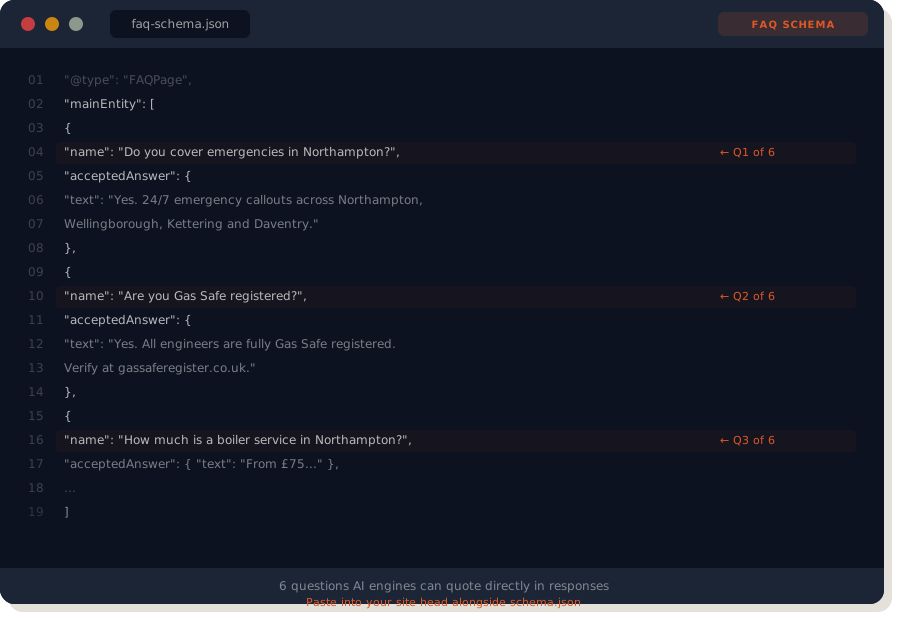
For AI-driven traffic, the problem is different. When someone asks ChatGPT or Gemini for a recommendation, the AI doesn't send them to your website — it either recommends you directly or it doesn't mention you at all. If you're not being recommended, no amount of website design improvement will fix it. The fix is technical: schema markup, an llms.txt file, and FAQ content written in plain language that AI engines can quote directly. Businesses that have these in place get recommended. Businesses that don't get skipped entirely.
Having a website doesn't automatically mean Google or AI engines know about you. A website that isn't indexed, doesn't have schema markup and lacks consistent business data across the web is effectively invisible — to both humans searching on Google and AI engines generating recommendations.
For Google rankings, the gap is usually technical: missing or incomplete schema markup, no sitemap, inconsistent business details across directories, or thin content that doesn't give Google enough to work with.
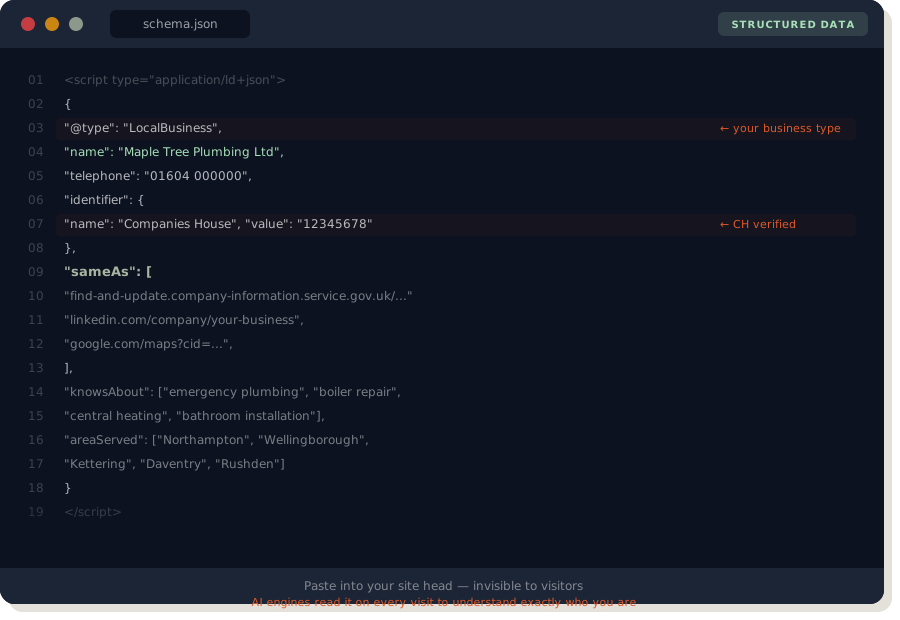
For AI search, the gap is almost always the same two missing files. Schema markup tells AI engines who you are. An llms.txt file gives them explicit permission and guidance to cite you. Without both, your business doesn't appear in AI-generated recommendations regardless of how good your website looks or how long you've been trading.
The businesses winning in AI search right now aren't necessarily the biggest or the best — they're the ones who got the technical files in place first. That window won't stay open indefinitely.
Google and AI search engines are completely different systems looking for completely different things.
Google crawls and ranks web pages based on relevance, authority and technical quality. It's been doing this for twenty-five years and it's very good at finding websites even when the technical setup is imperfect.
AI engines — ChatGPT, Gemini, Perplexity and others — don't rank pages. They identify and cite verifiable business entities. To be cited, your business needs to pass a verification check: schema markup confirming your identity and what you do, an llms.txt file giving AI crawlers explicit guidance, consistent NAP data across every platform, and ideally a verified Companies House entry that AI engines can cross-reference.
A business that ranks well on Google but lacks these files will be invisible to AI search. A competitor with weaker Google rankings but complete AI technical files will be recommended instead. Most businesses have spent years optimising for Google and nothing on AI search. That's the gap — and it's closable in minutes with the right files in place.
Google ranks you based on keywords and links. ChatGPT only recommends businesses it can completely verify and understand instantly. If your site lacks specialised AI indexing data, ChatGPT won't risk recommending you to its users.
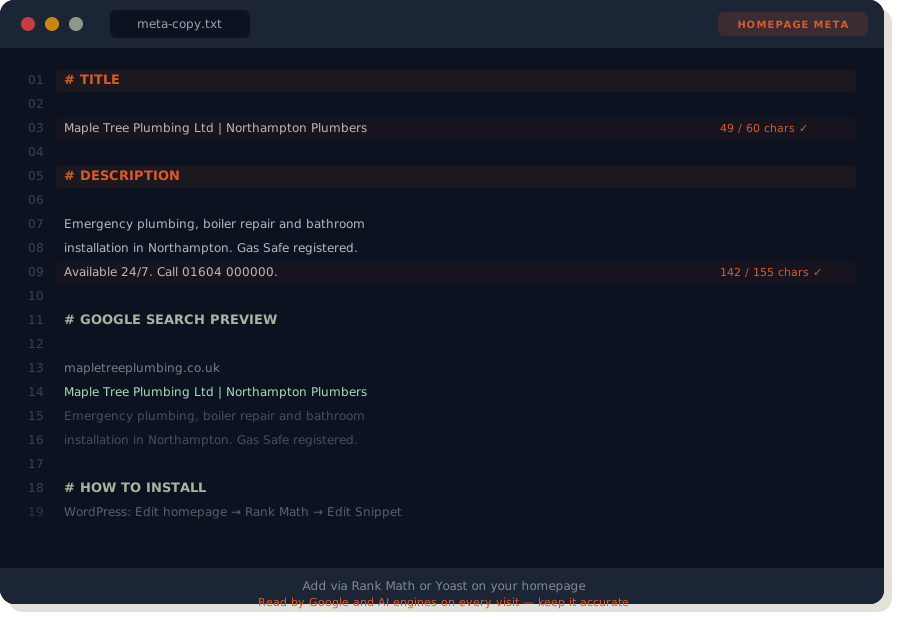
You must install specific background files that act as a universal translator. These files structure your business name, services, and location into a clear format that AI crawlers are explicitly programmed to look for.
They are specialised data packages (including custom Schema markup, updated robots protocols, and structured AI identity files) that clearly define your services for machine learning models. We build all of these for you automatically.
The honest answer is that llms.txt alone is not a silver bullet, and any service that claims otherwise is overstating the evidence. What the file does is form part of a structured identity layer — alongside schema markup, verified business data, and correct crawler permissions — that AI engines use to build a reliable picture of your business. No single file creates AI visibility. The combination of all nine signals working together is what shifts your score from 23/100 to 100/100. If you score 23/100, you are not failing on one signal — you are failing on most of them. That is what the files correct.
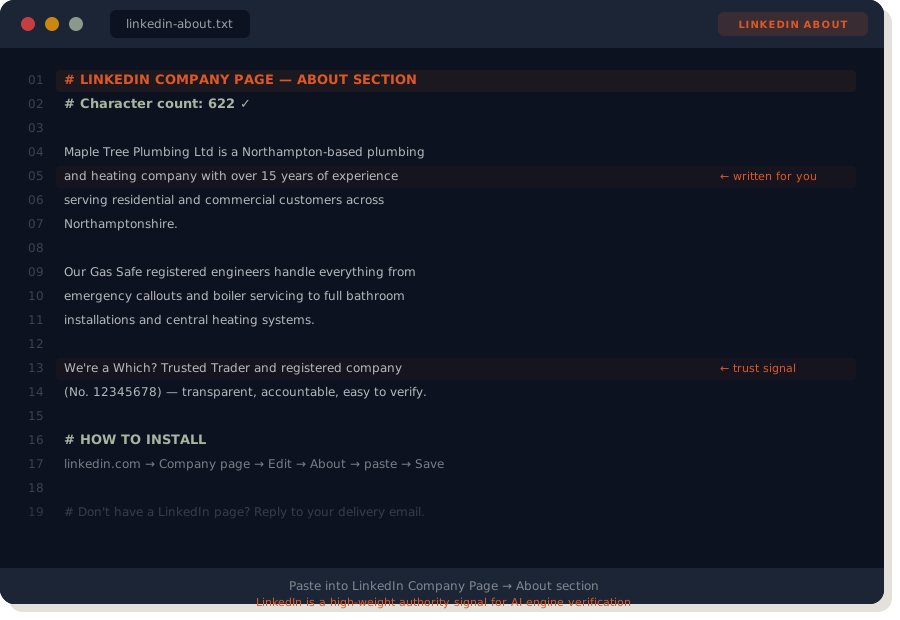
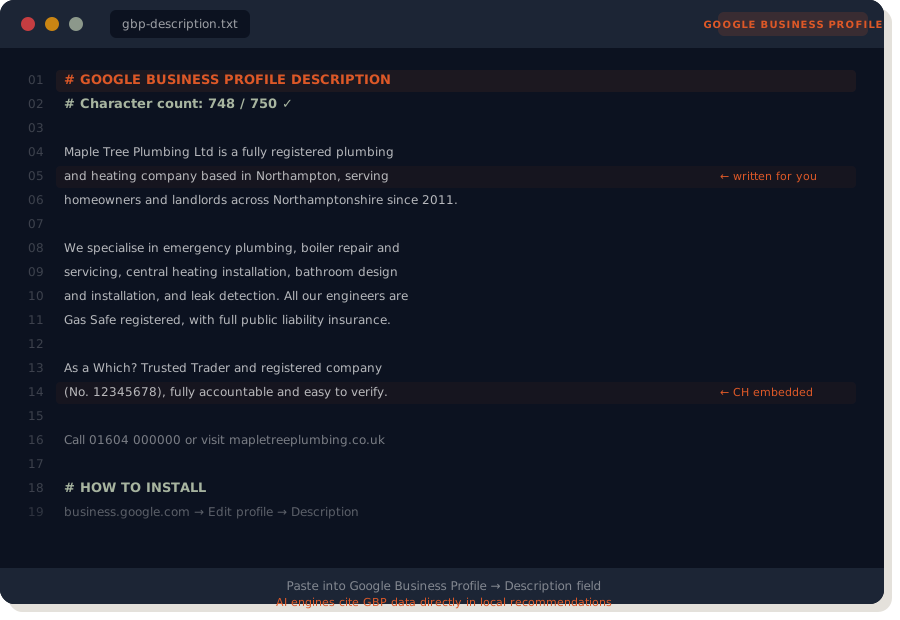
Three things. Schema markup on your website confirming your business identity, type, location and services in a format machines can read. An llms.txt file at your domain root giving AI language models explicit guidance on who you are and what you should be recommended for. And consistent, verified business information across every platform where your business appears — your website, Google Business Profile, Companies House and any directories you're listed on.
Without schema markup, AI engines see a webpage but not a business. Without an llms.txt file, AI crawlers have no explicit signal to cite you. Without consistent data, AI engines flag your business as unverifiable and skip it. With all three in place, your business enters the pool of entities AI engines can confidently recommend.
This is technical work, not content work. The files are specific to your business and need to be generated correctly. Once they're deployed you don't need to maintain them — until AI standards evolve, which is why an annual refresh is worth having.
Your competitor has the technical files in place and you don't. That's almost always the answer.
It's not about how long they've been in business, how good their website looks, or how strong their Google rankings are. AI engines cite businesses they can verify. Verification requires schema markup, an llms.txt file and consistent business data. A competitor who set those files up — even recently — will be cited ahead of a business with better Google rankings and a longer trading history that hasn't touched the AI technical layer.
The gap that feels unfair is actually an opportunity. Most businesses haven't fixed this yet. The ones who have moved early are pulling ahead not because they're better businesses but because they got the files in place first. The fix is not complicated and it doesn't take long. The window where early movers have a clear advantage won't stay open indefinitely.
Each AI engine works slightly differently but the technical requirements are consistent across all three.
Schema markup on your website — specifically LocalBusiness or Organisation schema with your full business details — tells every AI engine who you are and what you do. An llms.txt file at your domain root gives language models explicit guidance on your business and what queries you should be recommended for. FAQ schema written in plain direct language gives AI engines pre-formatted answers they can quote without interpretation.
Perplexity recrawls frequently and tends to pick up new files fastest. Gemini pulls heavily from Google's knowledge graph, so a complete Google Business Profile and verified Companies House entry accelerate visibility there. ChatGPT updates more slowly but schema markup and llms.txt are the primary signals it uses to identify and cite businesses.
The same files work across all three. You don't need a separate strategy per engine — you need one correct technical implementation and all three benefit.
For Google, the three levers are technical quality (fast load times, clean structure, no crawl errors), relevant content (pages that directly answer specific searches your customers make), and authority (other credible websites linking to yours). The quickest wins are nearly always technical fixes — schema markup, consistent business data, a submitted sitemap — because these are gaps most competitors haven't addressed either.
For AI search, the requirements are more specific. You need schema markup, an llms.txt file at your domain root, FAQ content written in plain direct language, and consistent verified business information across the web. These don't take months to implement — they're files that can be generated for your specific business and deployed in an afternoon.
The important point is that fixing both doesn't mean doing twice the work. The technical foundation is shared. Get schema markup right and both Google and AI search benefit. Add an llms.txt file and AI engines can finally identify and recommend your business. Most businesses are optimising for Google and ignoring AI entirely — which means anyone who fixes both right now is operating in a gap their competitors aren't even looking at yet.
Paid ads stop the moment you stop paying. Organic visibility — ranking on Google and being cited in AI search — compounds over time and costs nothing per click.
For Google, organic growth comes from being the clearest, most credible answer to the searches your customers are already making. That means pages built around specific search queries, schema markup helping Google categorise your business correctly, and consistent verified business data that builds Google's confidence in recommending you.
For AI search, organic visibility works differently. There are no rankings to climb — you either have the technical files that allow AI engines to verify and cite you, or you don't. An llms.txt file, schema markup and FAQ schema are the entry requirements. Meet them and your business is in the pool of businesses AI engines can recommend. Miss them and you're not in the pool at all, regardless of how good your service is or how long you've been trading.
Right now, the AI search pool is small. Most businesses aren't in it. Getting in now costs the price of the technical files, not an ongoing ad budget.
The gap between what your website says and what your customers search for is usually the core problem. Google needs your pages to use the exact language your customers type. AI engines need your pages to state explicitly what you do, who you do it for and where you operate — in plain, structured language that machines can extract and quote.
For Google, this means auditing the searches that matter to your business and making sure each one has a dedicated page that directly answers it. Schema markup then gives Google the structured layer it needs to categorise you correctly.
For AI search, the same pages need FAQ content written as direct questions and answers, an llms.txt file summarising your business for AI crawlers, and schema markup that tells AI engines your business type, location and services. This isn't about rewriting your entire website — it's about adding a technical layer that AI engines can read independently of your page copy.
Businesses that do both rank better on Google and get cited more often by AI engines. The two goals are not in competition. They're the same technical job approached from two directions.
The fastest legitimate route to Google visibility is local search. Optimising your Google Business Profile, ensuring your business name, address and phone number are consistent across every directory, and adding schema markup to your website can produce visible results within weeks rather than months. These are technical fixes, not content campaigns, which means they don't require ongoing effort once they're done.
For AI search the timeline is similar but the actions are different. An llms.txt file, correctly formatted schema markup and FAQ schema written in plain language can be picked up by AI crawlers within days of going live. Perplexity in particular recrawls frequently. ChatGPT and Gemini update more slowly but the files need to be in place before any update cycle for your business to be included.
The businesses that move fastest are the ones that fix technical gaps rather than waiting for content to compound. Content takes time. Technical files take minutes to deploy and their effect is immediate once crawlers find them.
Fix the technical foundation first. Content takes months to rank. Technical files take days to be crawled once deployed.
For Google: submit a sitemap to Google Search Console, add LocalBusiness schema markup to your homepage, ensure your business name, address and phone number are identical across every directory, and complete your Google Business Profile fully. These actions can produce visible improvement in Google local rankings within two to four weeks.
For AI search: add an llms.txt file to your domain root, implement FAQ schema on your key pages, and ensure your schema markup includes your business type, services, location and — if applicable — your Companies House registration number. AI engines use that registration number to cross-reference your identity against public records. Businesses that include it are treated as higher-confidence entities.
Both fixes share the same starting point: schema markup. Get that right and you've addressed the single most important technical gap for both Google and AI search simultaneously. Everything else builds from there.
Because our system audits and builds your custom architecture programmatically, your files and reports are generated automatically and sent to your inbox within minutes of checkout.
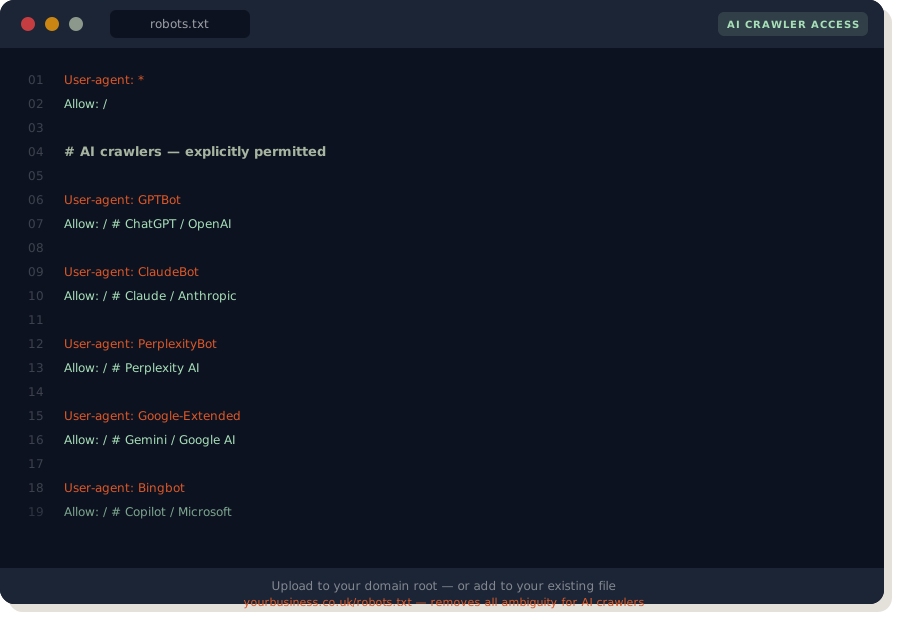
No. We check your domain externally — the same way AI engines crawl it. We generate the clean, validated files (llms.txt, updated schema code, and robots.txt instructions) and deliver them to your inbox with a copy-and-paste guide. You or your web developer can install them in less than five minutes without sharing passwords. We never need login credentials for anything.
If you approach a traditional digital marketing agency, they will likely quote you upwards of £3,000 for a multi-month "AI Readiness Audit." We think that's nonsense. GEO and AEO rely on clean, precise technical parameters. We automate the heavy lifting to deliver a fixed-price, plain-English solution in minutes, saving you thousands of pounds and months of waiting.
No problem. Companies House verification is advisory — relevant for Ltd companies only. Sole traders get all the same core files and signals. sameAs links to Google Business Profile and LinkedIn do the same trust-building job.
Files are delivered automatically within minutes of purchase. If your files have not arrived within 60 minutes, check your spam folder first — our emails occasionally land there. If they are not there either, email us by clicking here with your order reference and we will investigate and redeliver or refund you. No questions asked.